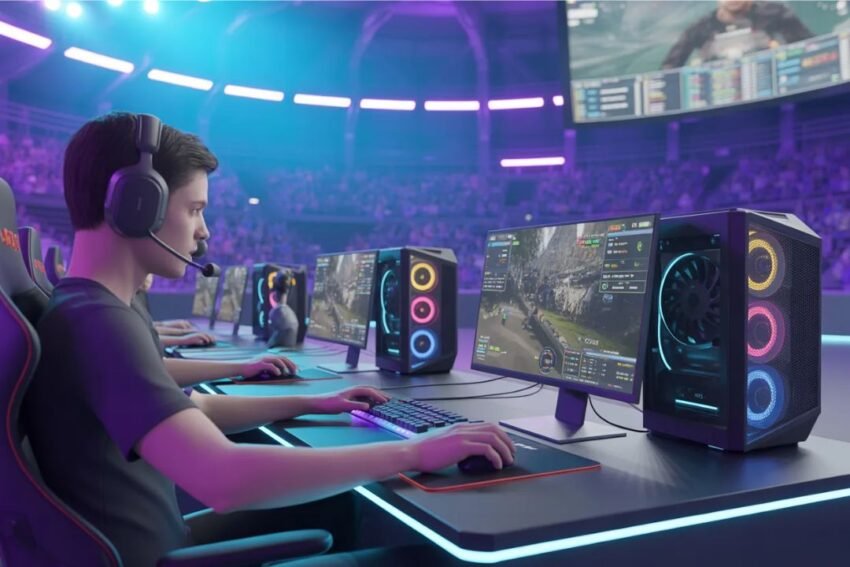
Gaming is no longer tied to expensive hardware or physical consoles. In 2026, cloud gaming is transforming how people access and play games—making high-end experiences available on almost any device with an internet connection.
But is cloud gaming truly the future of the gaming industry, or just a complementary trend? This SEO-optimized, human-written guide explains everything you need to know.
What Is Cloud Gaming?
Cloud gaming (also known as game streaming) allows you to play video games over the internet without downloading or installing them on your device.
Instead of running the game locally, powerful remote servers handle all the processing. The video output is streamed to your device in real time—similar to watching Netflix, but interactive.
How Cloud Gaming Works
Cloud gaming relies on a combination of advanced technologies:
1. Remote Servers
Games run on high-performance data centers instead of your local device.
2. Streaming Technology
The game is streamed as video to your screen with minimal delay.
3. Input Transmission
Your controller or keyboard inputs are sent back to the server instantly.
4. Internet Connection
A fast and stable internet connection is essential for smooth gameplay.
Top Cloud Gaming Platforms in 2026
Several companies are leading the cloud gaming revolution:
- Microsoft (Xbox Cloud Gaming)
- NVIDIA
- Sony
- Amazon
These platforms allow users to play AAA games on smartphones, tablets, smart TVs, and low-end PCs.
Benefits of Cloud Gaming
1. No Expensive Hardware Required
You don’t need a high-end gaming PC or console.
2. Instant Access to Games
No downloads, updates, or installations.
3. Cross-Device Compatibility
Play on your phone, laptop, or TV seamlessly.
4. Lower Upfront Costs
Subscription-based models make gaming more affordable.
5. Always Up-to-Date
Games and hardware are maintained by the service provider.
Drawbacks of Cloud Gaming
Despite its advantages, cloud gaming has limitations:
1. Internet Dependency
Poor connection = lag, buffering, and interruptions.
2. Latency Issues
Even slight delays can affect competitive gaming.
3. Subscription Costs
Monthly fees can add up over time.
4. Limited Game Libraries
Not all games are available on every platform.
Cloud Gaming vs Traditional Gaming
| Feature | Cloud Gaming | Traditional Gaming |
|---|---|---|
| Hardware | Minimal required | Expensive PC/console |
| Performance | Depends on internet | Depends on hardware |
| Setup | Instant | Installation required |
| Portability | High | Limited |
| Ownership | Subscription-based | Own your games |
Role of 5G and High-Speed Internet
The expansion of 5G networks is accelerating cloud gaming adoption.
Why It Matters:
- Lower latency
- Faster speeds
- More stable connections
This makes cloud gaming more viable, even for fast-paced multiplayer games.
Impact on eSports and Competitive Gaming
Cloud gaming is influencing eSports, but not replacing traditional setups yet.
Advantages:
- Easier access for new players
- Lower entry barriers
Challenges:
- Latency concerns in competitive environments
- Need for ultra-stable connections
For now, professional eSports still relies on high-performance local hardware.
Cloud Gaming and the Future of Game Development
Developers are adapting to cloud-based ecosystems.
Key Changes:
- Games optimized for streaming
- Reduced hardware limitations
- Larger, more complex game worlds
Cloud infrastructure allows developers to push boundaries beyond traditional hardware limits.
Integration with Emerging Technologies
Cloud gaming is evolving alongside other innovations:
AI Integration
- Smarter game mechanics
- Personalized experiences
Virtual Reality (VR)
- Streaming VR experiences without powerful local hardware
Blockchain Gaming
- Digital ownership and decentralized gaming economies
Is Cloud Gaming the Future?
Cloud gaming is not replacing traditional gaming—yet. Instead, it’s becoming a major part of the gaming ecosystem.
Likely Future Scenario:
- Hybrid gaming (cloud + local hardware)
- More subscription-based models
- Increased accessibility worldwide
Cloud gaming will continue to grow, especially among casual and mobile gamers.
Who Should Use Cloud Gaming?
Ideal for:
- Casual gamers
- Players without high-end hardware
- People who value convenience
Not Ideal for:
- Competitive eSports players
- Gamers with unstable internet
- Those who prefer owning games
Tips to Get Started with Cloud Gaming
- Use a high-speed internet connection (at least 25–50 Mbps)
- Choose a reliable platform
- Use a wired connection if possible
- Test latency before committing
Key Trends in Cloud Gaming (2026)
- Expansion of subscription services
- Growth in mobile gaming
- Integration with smart TVs
- Improved streaming quality (4K and beyond)
- Global market expansion
Conclusion
Cloud gaming is reshaping the gaming industry by making high-quality games more accessible than ever. While it still faces challenges like latency and internet dependency, advancements in technology—especially 5G—are rapidly improving the experience.
In 2026, cloud gaming is not just a trend—it’s a powerful shift toward a more flexible, accessible, and connected gaming future.
For many players, it already offers a convenient alternative to traditional gaming. And as technology continues to evolve, cloud gaming is set to play a major role in the next generation of interactive entertainment.