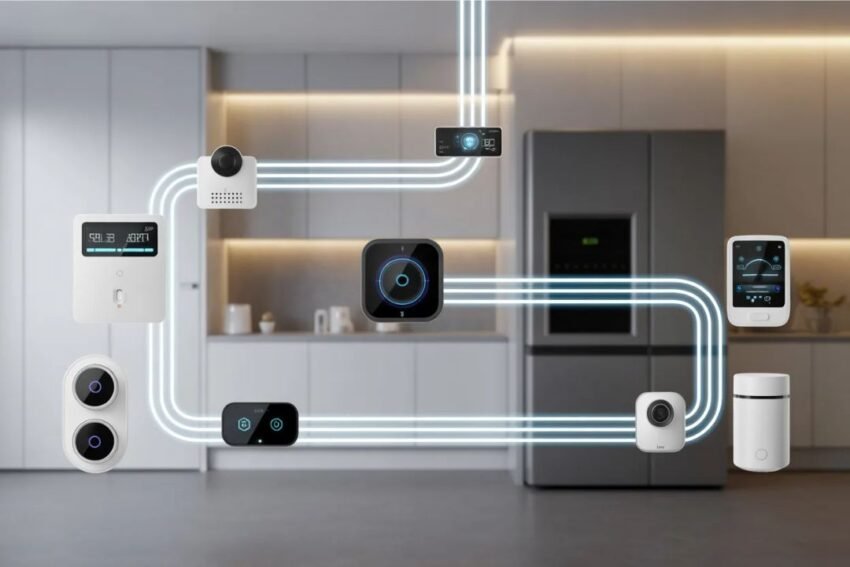
The Internet of Things (IoT) is no longer just a futuristic concept—it is deeply embedded in our daily lives in 2026. From the moment you wake up to when you go to sleep, IoT devices are quietly working in the background to make life more efficient, connected, and automated.
This SEO-optimized, human-written guide explains how IoT is changing everyday life, with real-world examples, benefits, and future trends.
🌐 What Is IoT (Quick Recap)?
IoT (Internet of Things) refers to a network of physical devices that are connected to the internet and can collect, share, and act on data.
👉 In simple terms: everyday objects become “smart” and can communicate with each other.
🏠 1. IoT in Smart Homes (Daily Convenience)
Smart homes are the most common example of IoT in everyday life.
Real-World Examples:
- Smart thermostats adjusting temperature automatically
- Smart lights turning on/off based on motion
- Voice assistants controlling appliances
- Smart door locks for keyless entry
👉 Devices communicate and automate tasks without manual input.
Benefits:
- Saves time
- Improves comfort
- Reduces energy bills
🚗 2. IoT in Transportation (Smarter Travel)
IoT is transforming how we travel every day.
Real-World Examples:
- GPS navigation systems
- Smart traffic signals
- Ride-sharing apps using real-time data
- Connected cars with built-in sensors
👉 Modern vehicles can even predict maintenance needs before breakdowns.
Benefits:
- Less traffic congestion
- Safer driving
- Faster travel routes
🏥 3. IoT in Healthcare (Smarter Medical Care)
Healthcare is one of the most impactful areas of IoT.
Real-World Examples:
- Wearable fitness trackers
- Remote patient monitoring devices
- Smart insulin pumps
- Hospital asset tracking systems
👉 Doctors can monitor patients in real time from anywhere.
Benefits:
- Faster diagnosis
- Remote healthcare access
- Improved patient safety
🏙️ 4. IoT in Smart Cities (Urban Innovation)
Cities are becoming more intelligent through IoT systems.
Real-World Examples:
- Smart street lighting
- Waste management sensors
- Air quality monitoring
- Smart parking systems
👉 Entire cities are optimized using real-time data.
Benefits:
- Reduced pollution
- Efficient resource usage
- Improved public services
🛒 5. IoT in Retail and Shopping
Retail stores are using IoT to improve customer experience.
Real-World Examples:
- Smart shelves tracking inventory
- Personalized shopping recommendations
- Contactless payments
- Automated checkout systems
👉 Shopping is becoming faster and more personalized.
Benefits:
- Better customer experience
- Reduced stock shortages
- Faster transactions
🏭 6. IoT in Industries (Industrial IoT)
Factories and industries rely heavily on IoT systems.
Real-World Examples:
- Predictive machine maintenance
- Automated production lines
- Supply chain tracking
- Smart sensors in manufacturing equipment
👉 Industrial IoT improves efficiency and reduces downtime.
Benefits:
- Lower operational costs
- Higher productivity
- Fewer machine failures
🏫 7. IoT in Education
Education systems are also becoming smarter.
Real-World Examples:
- Smart classrooms
- Attendance tracking systems
- Online learning platforms
- Connected learning devices
👉 Schools and universities use IoT for better learning experiences.
Benefits:
- Interactive learning
- Automated administration
- Remote education support
📡 8. IoT in Communication & Daily Devices
Even simple devices are now connected.
Real-World Examples:
- Smart TVs
- Smart speakers
- Wearable devices like smartwatches
- Connected home appliances
👉 These devices communicate with each other to simplify life.
Benefits:
- Hands-free control
- Seamless connectivity
- Personalized experiences
🔐 Key Benefits of IoT in Everyday Life
1. Automation
Tasks are performed automatically without human effort.
2. Efficiency
Saves time and energy by optimizing daily routines.
3. Convenience
Control devices from anywhere using smartphones.
4. Real-Time Data
Instant access to information improves decision-making.
5. Cost Savings
Reduces electricity, fuel, and maintenance costs.
⚠️ Challenges of IoT in Daily Life
Despite its benefits, IoT also has challenges:
1. Privacy Risks
Devices collect large amounts of personal data.
2. Security Issues
Connected devices can be vulnerable to cyberattacks.
3. Internet Dependency
IoT devices rely heavily on stable internet connections.
4. Compatibility Problems
Not all devices work well together.
🤖 Role of AI in IoT (2026 Trend)
In 2026, IoT is becoming smarter with Artificial Intelligence.
AI helps IoT systems:
- Predict user behavior
- Automate complex decisions
- Improve energy efficiency
- Detect security threats
👉 This combination is known as AIoT (AI + IoT).
🔮 Future of IoT in Everyday Life
IoT is expected to become even more advanced with:
- Fully automated smart homes
- AI-driven personal assistants
- Connected smart cities worldwide
- 5G-powered real-time communication
- Edge computing for faster responses
👉 Everyday life will become more connected and intelligent.
🧠 Final Thoughts
IoT is already transforming everyday life in powerful ways. From smart homes to healthcare and transportation, it is making systems more efficient, automated, and intelligent.
In 2026, IoT is not just technology—it is part of daily living.
🎯 Conclusion
IoT is changing everyday life by connecting devices, automating tasks, and improving how we interact with the world. Its impact can be seen in homes, cities, healthcare, transportation, and beyond.
👉 The future is a fully connected world where everything communicates seamlessly.